Halloween Candy, Edited: Keep the Treat. Skip the Autopilot.

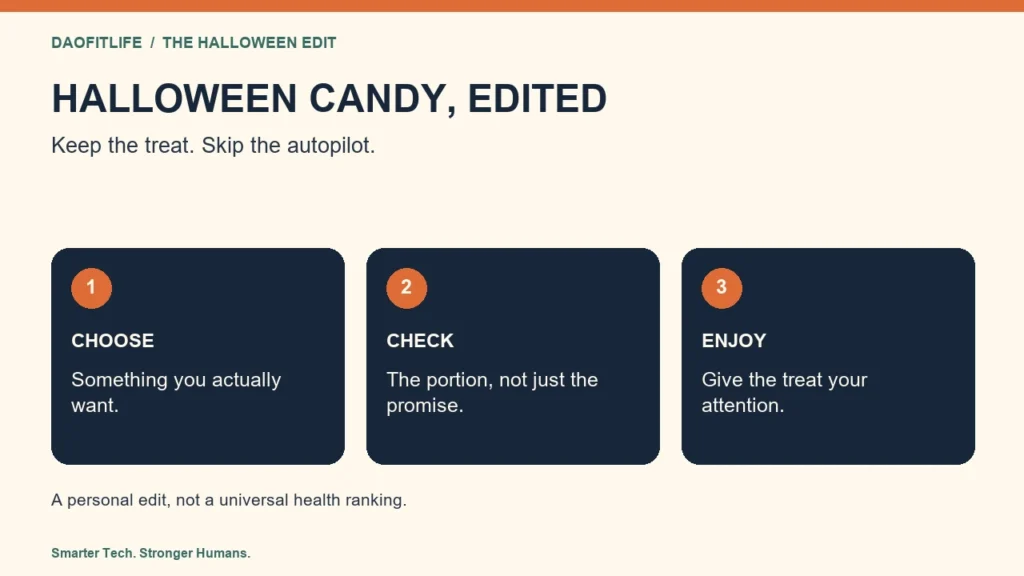
A practical best-and-worst list for people who want candy they actually enjoy, smarter swaps that earn their place, and fewer purchases made by a pumpkin-shaped wrapper.
By Lili Kazemi | DAOFitLife
The office candy bowl has excellent distribution and absolutely no editorial standards. Everything gets the same placement, whether it is your favorite chocolate or something you would never spend actual money on.
That is where a little discernment comes in. My best Halloween treat is something I want enough to notice. My worst is something I keep eating while answering email, then barely remember.
This is NOT the time to white knuckle. There is a better answer: choose the treat, understand the portion, and enjoy it. The Halloween costume can be elaborate. The food philosophy does not have to be.
“Best” and “worst” here are an edit, not a universal nutritional ranking. Your favorite might be my pass. A lower-sugar product might fit your preferences beautifully, or it might be an expensive understudy for the chocolate you wanted all along.
Best for me: the candy I actually want
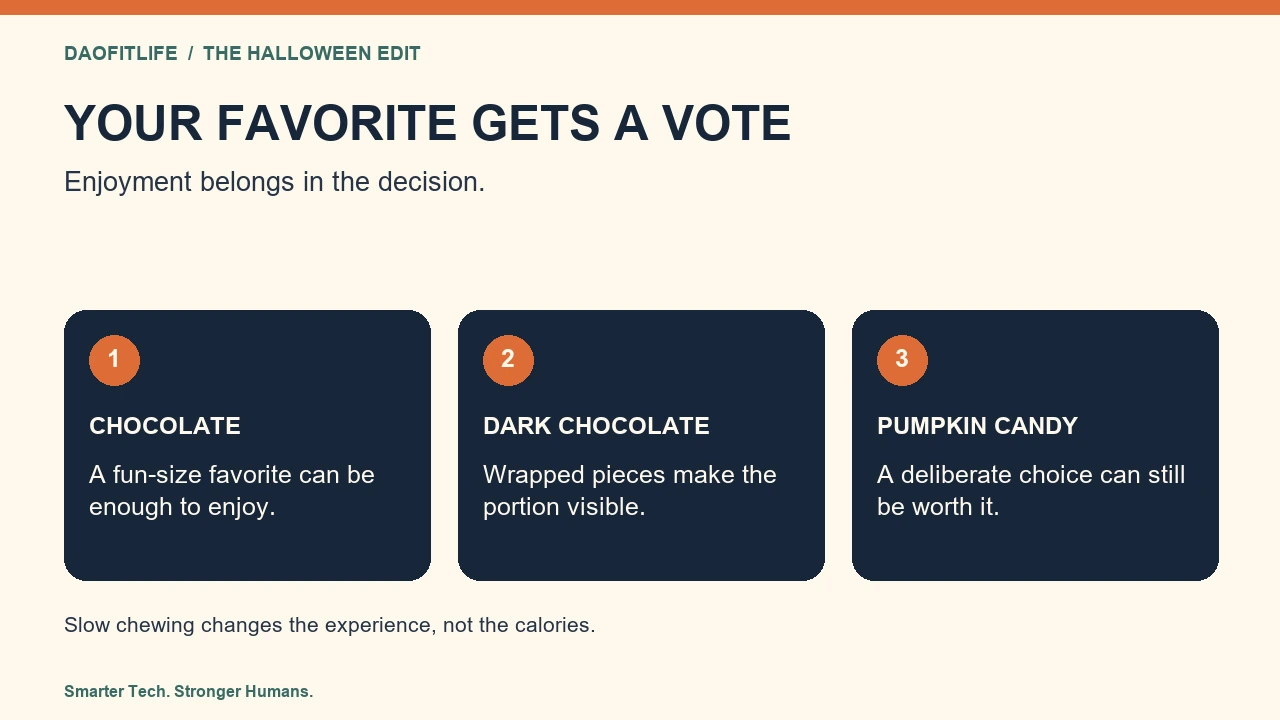
My favorites include 3 Musketeers and that elusive dark Milky Way. The official name of the latter is MILKY WAY Midnight Dark Chocolate, and the manufacturer currently lists a 1.76-ounce single bar. That confirms the product, not a convenient fun-size Midnight bag at your nearest store.
3 Musketeers Fun Size is a verified format. Its label lists two bars, 30 grams, at 130 calories. One bar therefore averages 15 grams and 65 calories, calculated from the label. The point is a recognizable portion of something I like, not a magical calorie number.
Individually wrapped dark chocolate is another useful option. For a concrete example, DOVE PROMISES Dark Chocolate lists four pieces, 32 grams, at 170 calories. Each averages eight grams and about 43 calories. “Dark” does not turn candy into medicine, and this particular product contains milk and soy. Read the actual wrapper.
And yes, pumpkin candy corn can make the cut. I generally want less absentminded eating of it. That does not mean a deliberately enjoyed pumpkin is disqualified. If it is what you want, bite into it and chew slowly enough to enjoy the texture and sweetness. Slow chewing does not change its calories or guarantee you will stop at one. It simply gives the treat your attention.
Smarter swaps, without the sales pitch
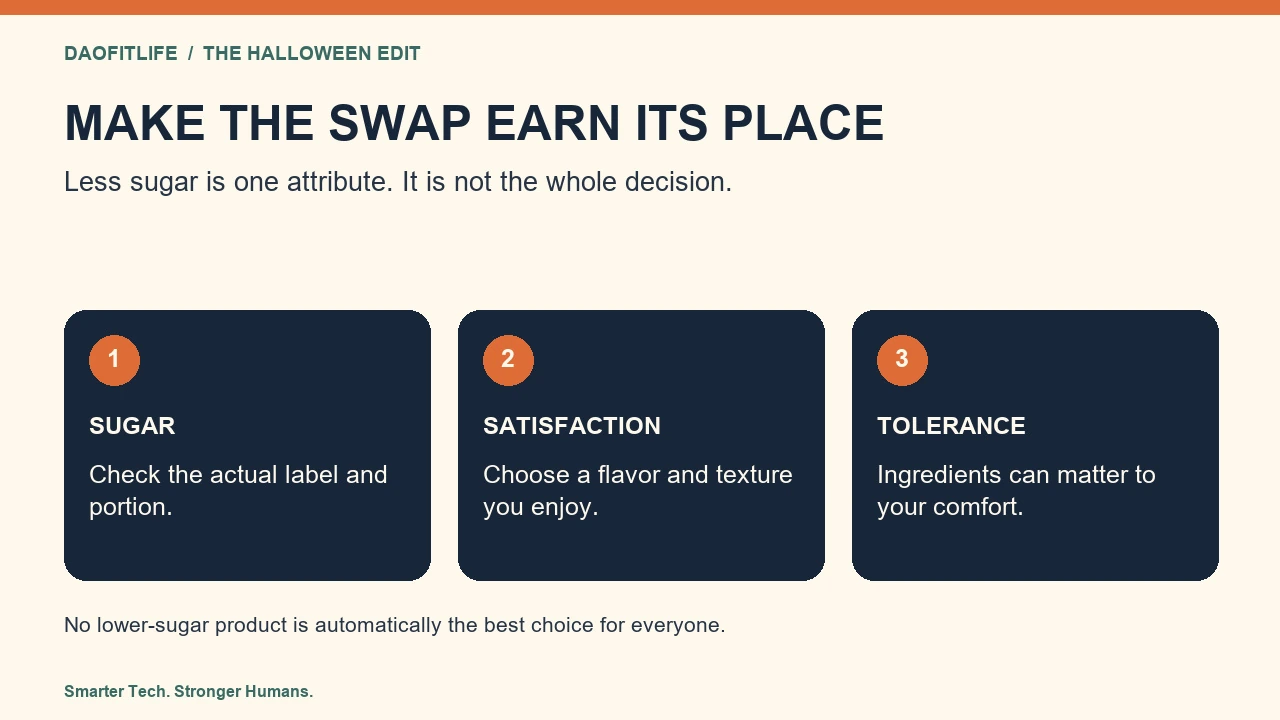
A swap earns its place by solving a problem you actually have. Perhaps you want less sugar, a different texture, or something that fits your preferences. “The front of the bag sounds virtuous” is a less compelling application.
SmartSweets Gummy Worms and Sour Gummy Worms each list 150 calories and three grams of total sugar per 50-gram bag. The regular worms list two grams of fiber; the sour version lists three. These are the labels checked for this article, not an older formula remembered from a different bag.
The ingredients include isomalto-oligosaccharides, chicory root fiber, gelatin and stevia. These two products do not list sugar alcohols. They also are not plant-based gummies: gelatin matters if that is a preference or restriction. A lower sugar figure is useful information, not proof that a whole bag is calorie-free or automatically more satisfying.
WHIMS Caramel Cookie Bar is the caramel-and-cookie option for that Twix-style craving. The caramel-specific label pictured on Netrition lists one piece, 20 grams, at 70 calories and one gram of total sugar. That is a specific lower-sugar option, not a free pass from portions or a promise about blood sugar. The caramel-specific ingredient list includes isomalto-oligosaccharides and monk fruit extract, with no sugar alcohol listed. Check the package you buy, especially for allergens.
For the candy-coated chocolate category, the confirmed brand is UNREAL. Its Milk Chocolate Gems list 35 pieces, 30 grams, at 140 calories and 14 grams of total sugar. That is still candy made with chocolate and sugar. The colorful shell does not need a wellness résumé.
UNREAL Dark Chocolate Peanut Butter Cups list one 15-gram cup at 80 calories and five grams of sugar. The current ingredients include cane sugar, peanuts, palm oil and blue agave inulin. “UNREAL” is a brand name, not an exemption from reading the label.
Quest Peanut Butter Cups take a different approach. Two cups, 42 grams, provide 200 calories, 11 grams of protein, less than one gram of sugar and eight grams of erythritol. They also contain four grams of fiber and 10 grams of saturated fat. Protein and low sugar are genuine attributes. They do not automatically settle whether these are the cups you want.
Tolerance belongs in this decision, too. NIDDK explains that sugar alcohols and too much fiber can cause gas in some people. That is relevant to Quest’s erythritol and added fiber, and to fiber-containing alternatives more generally. It does not establish that a particular serving will upset your stomach. Nor should every lower-sugar candy be blamed for sugar alcohols it does not contain.
Compare the portions before the promises
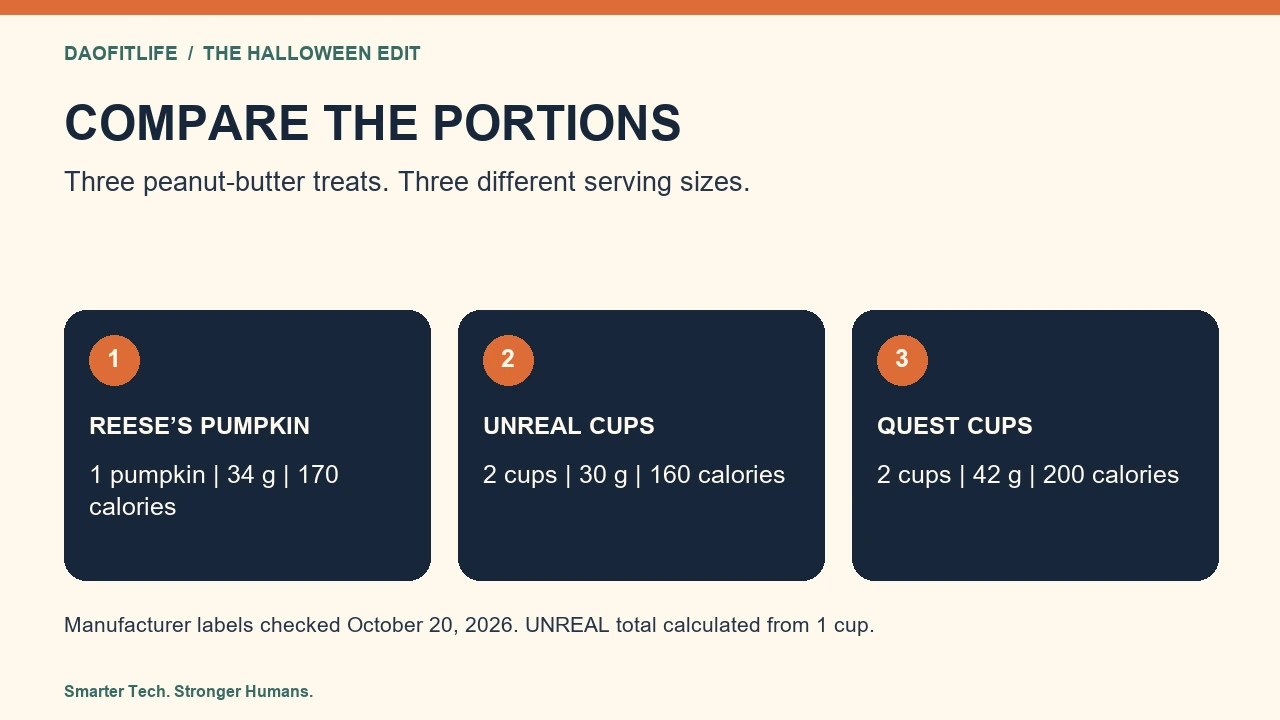
Here is the part the front-of-package enthusiasm often leaves out: the packages are different sizes. A serving can mean one cup, two cups, an entire bag or 35 little gems.
The standard REESE’S Milk Chocolate Peanut Butter Pumpkin is one 34-gram package at 170 calories and 16 grams of sugar. This is the 1.2-ounce version, not a miniature, king size or white crème version.
Two UNREAL cups total 30 grams, 160 calories and 10 grams of sugar. Two Quest cups total 42 grams and 200 calories. Neither comparison justifies a blanket “fewer calories” claim. If you compare equal 30-gram portions, the Reese’s label works out to about 150 calories, UNREAL to 160, and Quest to about 143. Those are calculations from rounded labels, not specially manufactured portions. The sugar, ingredients, taste and portion you actually plan to eat still matter.
For a cookie-and-caramel comparison, the official TWIX Fun Size label lists one 16-gram bar at 80 calories and eight grams of total sugar. WHIMS lists a larger 20-gram piece at 70 calories and one gram of sugar. At an equal 20 grams, TWIX works out to 100 calories and 10 grams of sugar, versus WHIMS at 70 and one. That equal-weight TWIX portion is a calculation from the rounded label, not a packaged serving. Here the available labels support both a sugar and calorie difference. They still cannot tell you which one will satisfy you more.
Likewise, a whole 50-gram gummy bag and a 15-gram fun-size chocolate bar are different amounts of different foods. Calling the smaller one a nutritional victory would tell you more about the comparison than the candy.
Use the label as context. Decide what matters to you. Then ask the unglamorous question: will I enjoy this enough to choose it again?
What I would skip or minimize
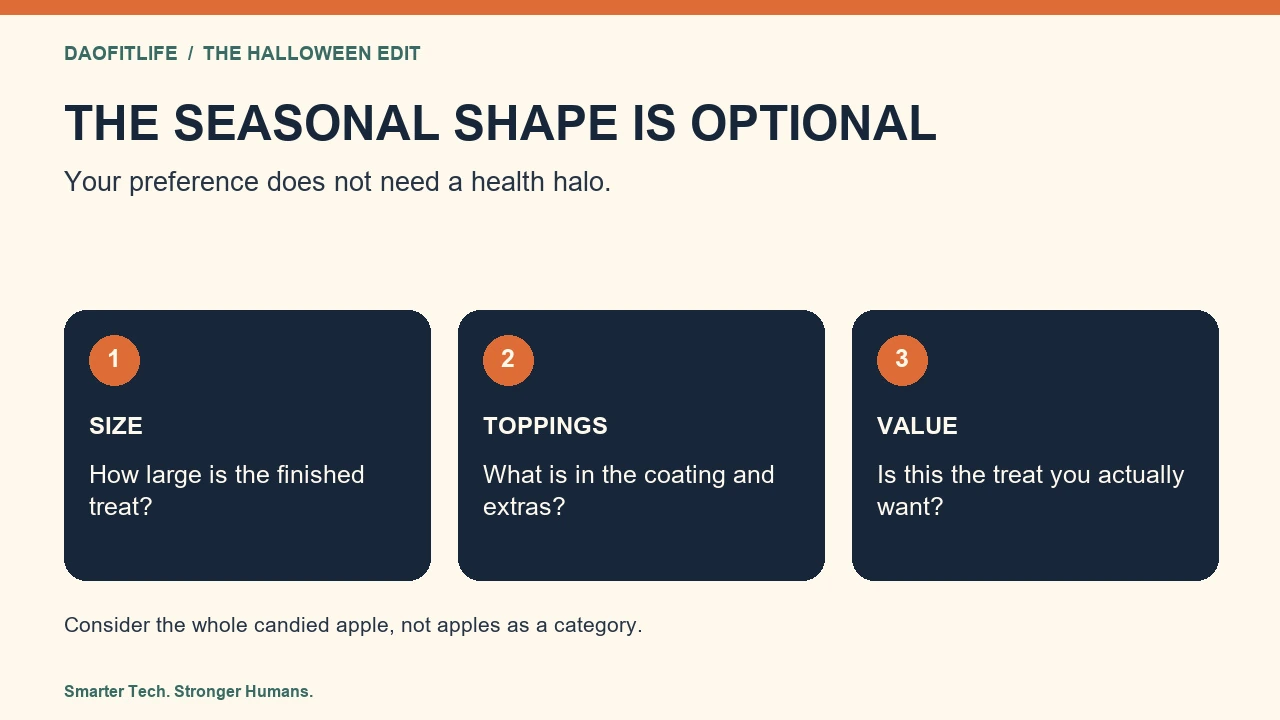
Candied apples can involve a substantial apple, a thick sugar or caramel coating, and another layer of chocolate, nuts or candy. The size and construction matter. The apple itself is not the problem, and there is no single honest calorie figure for every decorated apple on a stick. If the finished creation is what you want, consider how much you want to enjoy and whether sharing makes sense.
Reese’s pumpkins are a personal value call. For me, the seasonal shape may not be worth choosing when a satisfying substitute exists. That is a preference, not evidence that every alternative is nutritionally superior. If the pumpkin is precisely what you want, own that choice. A pumpkin-shaped chocolate does not require a courtroom defense.
I would also minimize the candy I do not particularly like. It does not become a better use of my attention because it is free, seasonal or sitting within reach. Saving room for something enjoyable is different from ignoring hunger. If you are hungry, eat something that addresses hunger. Candy does not need to perform every job.
Different question: is it safe to eat?
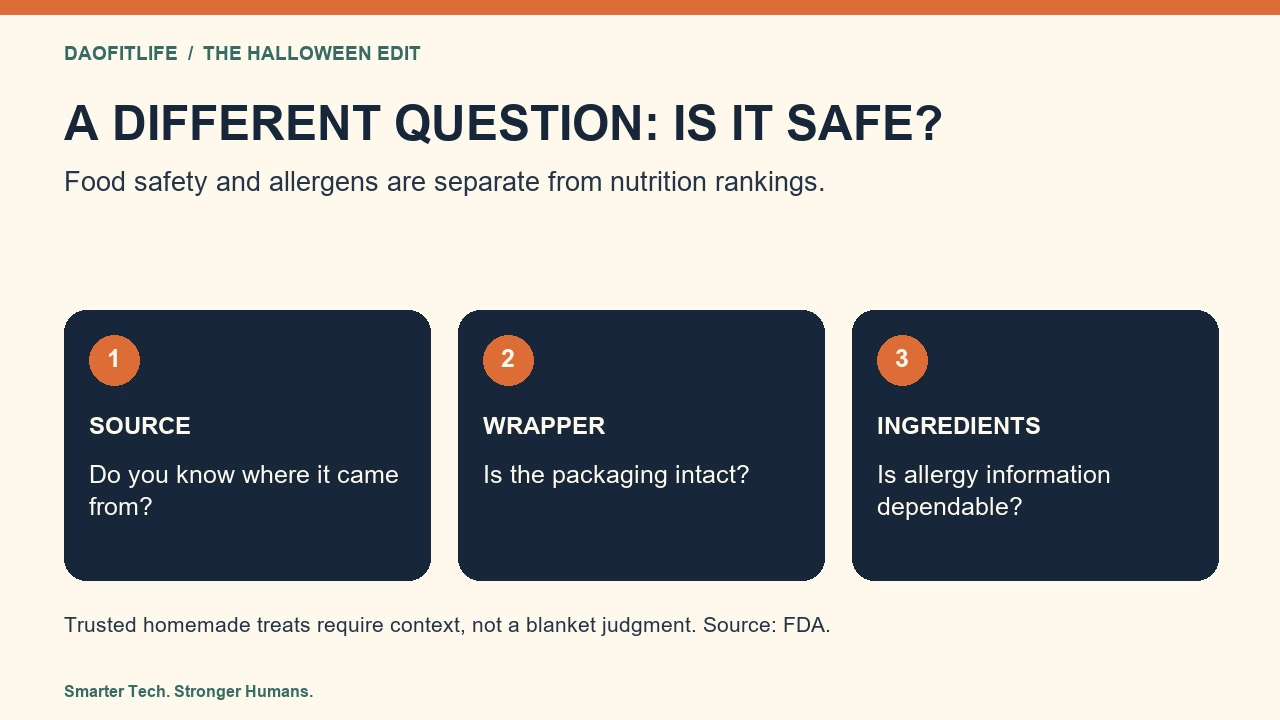
Food safety deserves its own category. Unknown-source unwrapped candy, damaged packaging and unclear ingredients raise different questions from sugar or calories.
The FDA’s Halloween guidance recommends checking commercially wrapped treats for signs of tampering and checking labels when allergies matter. If you cannot establish what something contains or where it came from, skip it.
That does not mean every homemade treat from someone you know and trust is unsafe. It means the source, preparation and ingredient information matter. For a food allergy, “probably fine” is not a substitute for dependable information about ingredients and cross-contact.
The sweet-and-salty Halloween crunch mix
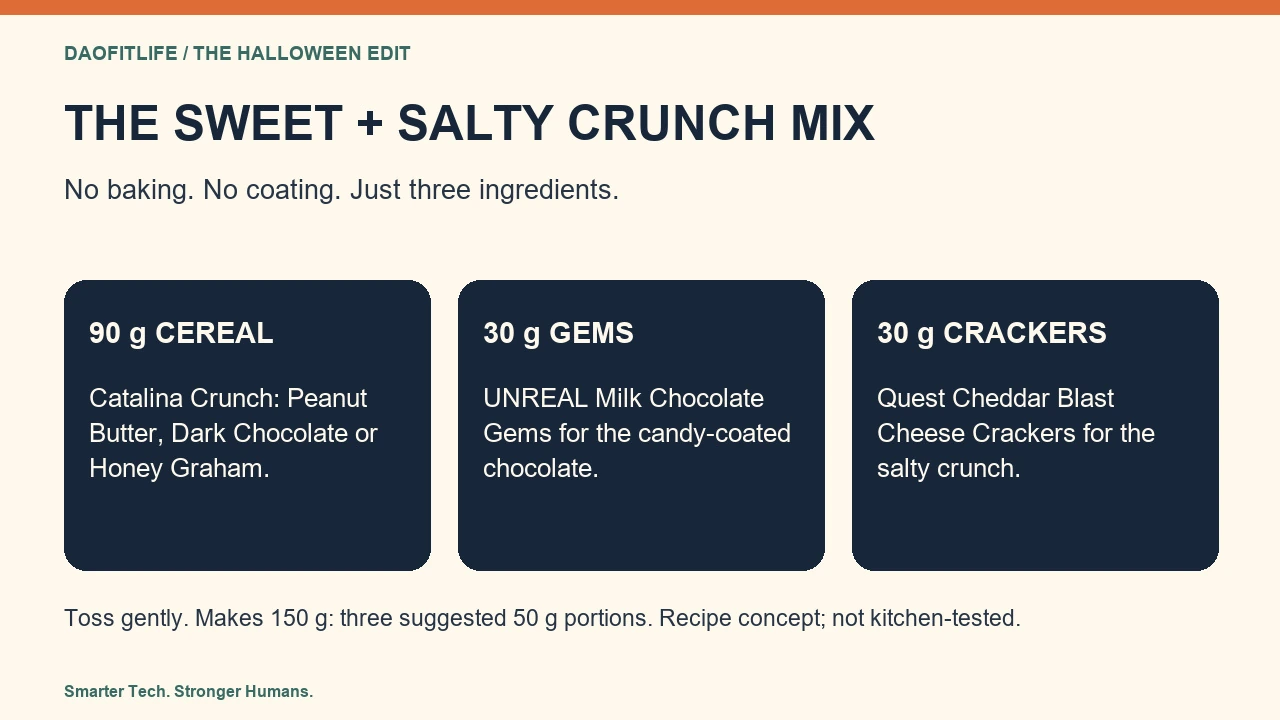
For the person who wants chocolate and something salty in the same handful: a three-ingredient mix, no oven or elaborate coating required. The point is variety and enjoyment, not turning candy into a nutritional loophole.
Ingredients for one small batch: 90 grams of Catalina Crunch cereal in Peanut Butter, Dark Chocolate or Honey Graham; 30 grams of UNREAL Milk Chocolate Gems, the candy-coated chocolate pieces; and 30 grams of Quest Cheddar Blast Cheese Crackers for the salty crunch. Choose one cereal flavor, or combine them to total 90 grams.
Pour the cereal and crackers into a dry bowl, add the Gems and toss gently. That is the entire cooking show. The batch weighs 150 grams and makes three suggested 50-gram portions. Stir before dividing so the candy does not quietly migrate into somebody’s very fortunate bowl. These are recipe portions, not the manufacturers’ serving sizes.
Peanut Butter gives you a peanut-and-chocolate direction; Dark Chocolate keeps the cereal on the chocolate theme; Honey Graham offers another flavor contrast. Adjust the balance to your taste. If you change the quantities, the batch size changes too. Weighing is simply a way to make the recipe repeatable.
Check each package before mixing, especially when sharing. The peanut-butter cereal contains peanuts, the Gems contain milk, and Quest’s current cracker page lists milk, soy and wheat. Read all allergen and cross-contact information; switching cereal flavors does not make the finished mix allergy-safe. The fiber-containing cereal and crackers may also affect individual digestive comfort. No total nutrition figure is supplied because the cereal choice and actual packages matter.
Make the treat an actual event
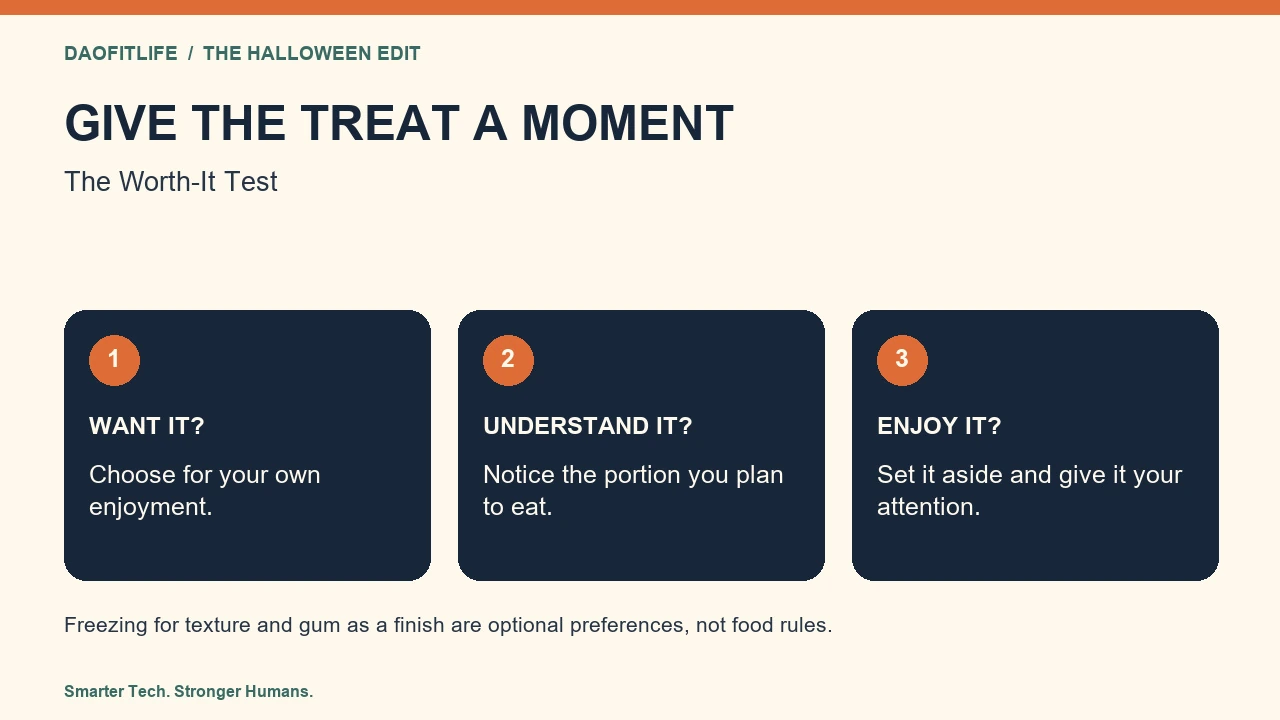
Try the Worth-It Test: Do I want this? Do I understand the portion? Can I give it a moment?
Set aside what you intend to enjoy instead of eating from the communal bowl while your inbox negotiates another deadline. You can choose more afterward. A portion is a starting decision, not a punishment.
Freezing suitable chocolates is an option if you enjoy the texture. Let them soften if they are too hard to bite comfortably. The freezer is a texture preference, not a device for making food difficult to eat.
A piece of gum afterward can be a pleasant finish if you like it and it agrees with you. It is optional, and it is not a way to suppress hunger. Gum and some sweeteners can also cause digestive discomfort for some people. No trick needs to become another rule.
The next best choice might be one favorite chocolate, a swap you genuinely enjoy, or the pumpkin candy corn you have been thinking about all afternoon. It might also be passing on something that was never especially appealing.
Decision: choose what is worth it to you.
Action: give the treat a portion and your attention.
Outlook: enjoy Halloween without handing the candy bowl your decision-making authority.
Smarter Tech. Stronger Humans.
– Lili Kazemi
Lili Kazemi is the founder of DAOFitLife and the author of Business Class Fitness. She writes about practical wellness for busy professionals who want stronger, healthier lives without making it another full-time job. About DAOFitLife
This article is general educational information, not individual medical or nutrition advice. Check the package you buy, especially for food allergies, because ingredients and labels can change. Product links are manufacturer or retailer label references; no affiliate links are used in this draft.
Created with AI, not by it. The imagination, lived experience, judgment, voice, and final edit are mine.